Sunday, October 7, 2018

Assess for Understanding

What is Assessment and how do we use it?

Assessment is the tool that we use to gain knowledge of where our learners are at in the subject matter we are teaching. It is also used to see how well they understood what you had taught. To see where the learners are at throughout your teaching is known as formative assessment. When you are trying to look at the overall picture to see what they grasped over your series of lessons is known as summative assessment.
Image result for formative versus summative assessment

There are different ways that we can assess students. Depending on what you taught your students can determine what type of assessment you are going to use. For instance, if you taught something that is very hands on and has step by step procedure it would make sense to do a practicum in the sense that they need to demonstrate it in front of you to show that they had learned and gained the skill that you wanted them to. However, if you taught them something that is very knowledge based like parts of a goat, then you might want to take the route of giving them an image of a goat and have parts that they need to label.

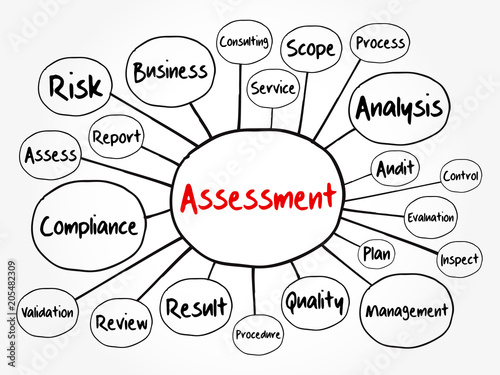
You can also check for understanding throughout your lessons by having them do knowledge based activities. Such as you taught them different concepts that can connect in certain ways. Maybe you would have them do a concept map to see what direction their thoughts are heading with the subject matter you had taught.
Related image
Assessments can also be used before you even start teaching! you can use pre-assessments to see where your learners are at even before you begin teaching. This way you don't waste your time or their time teaching content that they already know about. 

When reading through about assessment one thing that I got caught up on and never really thought about was having to make adaptations of the test to students with disabilities and ELL learners. making adaptations according to what a student's IEP may require is an obvious adaption, but how do you adapt when they don't have an outlined required adaptation. So, I am going to take this moment to pose a question to my readers.

If you have had to do this before, how do you make adaptions and it still be fair to ALL students?

If you have not ever done this for an assessment before, how do you think you would go about making these adaptations?

I want all students to feel as though they have an equal opportunity to succeed in my classroom, however on the same wavelength I want all of my students to feel that they are being treated fairly. Any advice on how to balance these two things would be appreciated greatly. 

When doing assessments one tool that is very useful and important is if it's not a multiple choice test with an answer key, then you need to have some sort of way to grade the assessment at hand. This tool would be a rubric. Rubrics ensure that there is a certain critera that students have to meet and it keeps it so you don't seem bias towards any one learner. It's a good way to make a sort of check list so that you can remember everything the student needs to do. It also helps the student's clearly know what they need to do.
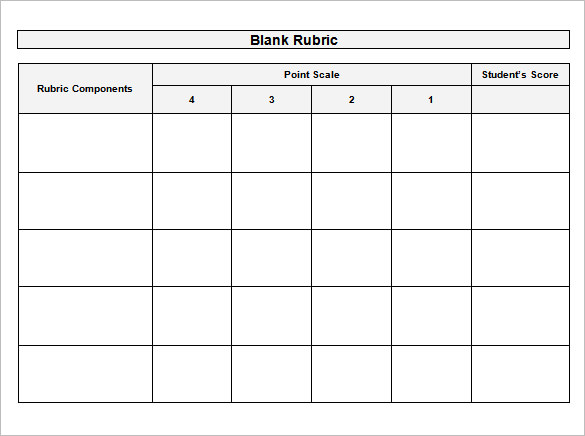
Image result for rubric template

Sunday, September 30, 2018

Weekly investment with Scooby-Doo

When I was a little girl my absolute favorite TV show was Scooby-Doo. I loved the show so much that my dad even honored me with the nickname of Scooby-Doo. Why am I telling you this? well because there was always a mystery to solve. Even as a little kid it was fun and intriguing to try and figure out what person the mystery gang was going to unveil behind the mask of the monster. My young mind didn't know it, but I was using context clues within that show to figure it out through problem solving. When it was an episode I had never seen before I never just automatically knew the answer.
Image result for scooby doo 90s
How does this relate to teaching you may ask?

Well problem solving is an important component that we have to incorporate into our lessons and daily classroom routines. It's one thing to just know something, but it's a whole other matter when you have to actually take what you know and apply it so a situation. When looking at Bloom's taxonomy when you are problem solving you are focusing on the top three tiers of the pyramid that promotes higher orders of thinking.

You can promote problem solving in many different ways in the classroom. It Doesn't have to be a major assignment. It can be something as simple as having them come up with a solution to a situation using what they had learned in class. For instance, say you taught the students about deer and how they behave. Then you taught them different wildlife management techniques. You then can propose a question to them like this: Farmer Mary is having an issue with deer coming in and destroying her crops, you are a wildlife management specialist and she asked you to help her. What are some management techniques you may suggest to farmer Mary?
Image result for farmer with question marks cartoon
Whenever you have students problem solve and give them the autonomy to create a solution to a problem that you had proposed some won't admit it, but they'll feel good about coming up with an answer. Problem solving is such an important skill to have that if you find a student struggling with a problem, be sure not to be discouraging. Lead them in the correct direction without giving them the exact answer. Students in the end will feel accomplished after they solved a problem for themselves. 

If all you're doing is asking simple lower level questions in your classroom then you aren't challenging your students to their full abilities. Part of our job is to create independent and critical thinkers. So, if you're not doing that make sure you ask yourself the question:

Hey problem solving.. where are you?
Image result for scooby doo magnifying glass cartoon

Friday, September 28, 2018

Unit reflection

First unit plan in the bag! 
Image result for unit planning Initially starting my unit plan I wasn’t sure where I was going to go with it. However, a wonderful friend from #PSUAgEd18 helped me out by showing me a unit plan that she had put together from student teaching last year. After I got a base of knowledge from her as to what I was to do, I was able to put together my unit for small vet skills. I felt pretty good about my first draft and then I handed it over to my peer reviewers.

When my reviewers gave me feedback, they wanted me to make sure that I had my references in APA format (formatting is one of my weaknesses as a writer I’ll admit that) and to make sure to add criteria into my daily objectives. With this advice I tweaked my original lesson plan some, and honestly making the final product wasn’t all that bad! 

I have a total of 13 unit plans to create. I now have one of them down and 12 more to go. Watch out student teaching here I come! 😎

Sunday, September 23, 2018

Weekly investment

Are questions the same?
The answer to that is no. Or at least it should be. Whenever you are asking your students questions they should not be expected to have the outcome of just a yes or no answer. Sure, sometimes a question may be posed that only requires a short answer. However, it is important to ask questions that really make the students have to think and dig into what they need to know out of a class. Questioning should be used as segues to transition smoothly from one topic to another while you are teaching in a class. When looking at Bloom's taxonomy I feel as though we need to be asking questions to students throughout a class that touch on each part of these orders of thinking.
It's always good to have an answer to the why we are learning certain content in class. I believe though it's even better when you ask the right questions to have the students realize what the why is without you having to tell them directly (however you should still be able to answer the why directly if the need arises).
Image result for the why
Student connection!

When students can not relate to what's going on it's hard for them to grasp a concept most of the time. It is also hard for a student to become interested in a subject if the teacher isn't engaging with them. It's easy to just stand and lecture at student's for the allotted time that you have to teach, but are you really teaching them? students that get lectured at are going to get bored and gaze off into space. they're going to fall asleep and direct their attention elsewhere. when there is no interaction between the students and the teacher, the students are not going to immerse themselves into the content the way they should. This will also make it difficult for the content the learn to stay in their long term memory. With all this being said though, this is why I'm thankful for taking the career path as an Agriculture educator because it's easy to get students engaged with all the hands on learning that is required of this subject area.
Image result for engaging students
Student passions

I personally believe that it's sad that we kind of file our students into curriculum that doesn't interest them. I understand that we need the core subjects for some fundamental knowledge, however I think we need to do a better job in our schools on encouraging students to pursue their passions. No one person is the same and we as educators need to realize that. If we allow students to pursue their passions early on in life could you imagine how knowledgeable they would be able to be in that area? Passion allows for intrinsic motivation to occur and it is amazing too see people talk when they are passionate about something. I believe we should fuel that passion instead of filing students into a line where we expect them all to turn out the same.    
                                  Image result for cartoon artist Image result for cartoon scientist

Friday, September 21, 2018

Interest approach


Image result for companion animals defined

It was a good day!
I presented an interest approach for a lesson that I anticipate teaching in the spring semester. Here I will set the scene. 

CLASS: Animal Science
UNIT: Small Vet Skills
LESSON: What animals does a small vet tend to?

I had set up seven stations around the room. station 1 was a picture, stations 2-6 were physical skeletal features of different animals. station 7 was a hamster that proposed the question: Why is it a good tool to use live animals or preserved specimen in a class like this? 

The students went around and attempted to identify the different items at each station. The behaviors that I had to cater to were: Sleepy, confused, and the average Joe. right off the bat it was easy to handle the "sleepy" behavior because for the most part of my interest approach the students were up and moving around. It's difficult to sleep when you need to walk. I believe that I handled the confused student well because I was able to provide clarity when the student did not quite understand what was going on. The average joe was super easy because they typically don't present any issues. 
Image result for different personalities cartoon
One thing that I wish I had done was actually put numbers on the stations and explain better that each station was suppose to correlate with the number that they had on their sheet of paper. Something as simple as labeling can make it so I am more clear with my students. Not labeling the stations is what I put as my opp for this lab because it is important to be as clear as possible with your students and not labeling the stations caused me to falter in that a little.

Now for my gems! 

I got students moving! an active student is an engaged student because they have to pay attention to what is going on around them. I hope to have some form of movement in all of my lessons even if it's something as simple as standing up and taking a mental break for 20 seconds. It will help break the monotony up in a lesson. 
Related image
I kept the students interested by keeping their curiosity peaked. when a student sees something in front of them that they aren't quite sure what it is they are going to be naturally curious about it whether they want to admit it or not. As a teacher I hope to continuously tap into that natural curiosity to keep students engaged!

Sunday, September 16, 2018

Structure in Instruction

What structure do we need in our instruction?

After reading this blog readers will be able to:

1. Explain the importance of objectives
2. Conclude why group work is a useful tool

Objectives are important because they not only set up a framework for knowing what you are going to teach, but it also allows the students to know what they are expected to learn in the given time frame. This will allow for a smoother lesson because there will be no questions as to where your lesson is going and students will know what key items they should be pulling out of the lesson are.
 Without objectives                                                                  With objectives
Image result for crossroad confusion                           Image result for understanding

When you are writing your objectives you want to pay attention to what verbs you are using. Different verbs will bring out different expectations for what level of learning the students need to be able to accomplish. For example when you say list, students will just be expected to memorize a set of information and not have to interpret it past that. however, if you use the verb explain then not only will student have to list, but the will also have to understand the parts of the information that you are giving them. whenever you put in a higher level of thinking verb, lower levels are more often than not encompassed by what you are trying to get out of the students. You also want to make sure that your use of different verbs is specific rather than broad. That will hone in the students focus better. an example would be using the word demonstrate rather than the word understand.

When you are designing a lesson one method that may come to mind is incorporating group work. Some students may groan at group work because of negative past experiences with it however, it is a good tool for having students teach each other. When creating groups it allows for different intelligence to work together and help each other come up with ideas that they may have not originally come up with on their own. This is where two heads are better than one rings true.
Related image
Small group work seems to be the best route for the group work to be successful. This is because smaller groups have a higher chance of everyone being held accountable and not allowing one person to slack off with what they are suppose to be doing. It also allows students to still share different ideas without getting lost in the sea of a larger group.

So, with all this being said objectives are important to give students and teachers a road map to know exactly what their destination is going to be. Meanwhile, group work is a good vehicle to use to help you get there.

Friday, September 14, 2018

First days..

The lab that I have completed was to show what I would do for a lesson on the first day of class. my classmates had roles to play as different problem students in the classroom. When I initially started my micro teaching I went in with confidence, however once I realized that I wasn't going to get an easy group of students, I tried my very best to reprimand all the behaviors. It was difficult keeping track of all of them even though there were only 4. I ended up having to divert from my lesson, so that I could establish my expectations sooner. That didn't really work for me either. I ended the lab frustrated if I am being perfectly honest. It wasn't for lack of trying though. at the end my gems that I told myself were:
I kept bouncing around and I really tried my hardest to make sure ALL student were paying attention
I also was able and ready to rearrange my lesson to try and adapt to the way the class was behaving and I stuck to my guns.
however my opp was that I got frustrated easier than I should have and I know that put a negative energy into the class that should not have been there.
Image result for quotes for positive thinking

After this lab I realized I have A LOT of work to do when it comes to classroom management.